Mechanic turning the propeller of a light aircraft with its cowling off, in a hangar doorway

Aircraft Owner Maintenance

An aircraft owner who holds a pilot certificate may do preventive maintenance on an aircraft they own or operate: the 31 jobs on the FAA's list in 14 CFR Part 43, Appendix A, from tires and spark plugs to oil filters, batteries and seats. A private pilot or higher can then sign the aircraft back into service; inspections, major repairs and anything not on the list need a certificated mechanic.

Michael Sawyer, A&P/IA aircraft mechanic and founder of Phalanx Aviation

By Michael Sawyer, A&P/IA

Founder, Phalanx Aviation

Phalanx Frequency Guide 3: The preventive maintenance owners may perform under FAR Part 43 Appendix A, and what still needs an A&P.

  • MX jobs a pilot can do?

    31

  • Who can do them?

    Pilot owners

  • Who signs it off?

    Private pilot+

  • Logbook entry?

    Required

All 31 Preventive Maintenance Jobs An Owner Can Do

The FAA's list, word for word, with a short name for each. Preventive maintenance is limited to the following work, provided it does not involve complex assembly operations. Search it for the job you have in mind, or page through all 31.

The preventive maintenance an owner-pilot may do, 14 CFR Part 43, Appendix A, paragraph (c)
JobGroupThe FAA's WordsItem
Remove, install and repair tiresLanding GearRemoval, installation, and repair of landing gear tires.(1)
Replace shock cordsLanding GearReplacing elastic shock absorber cords on landing gear.(2)
Service shock strutsLanding GearServicing landing gear shock struts by adding oil, air, or both.(3)
Clean and grease wheel bearingsLanding GearServicing landing gear wheel bearings, such as cleaning and greasing.(4)
Replace safety wire and cotter keysAirframe And FinishReplacing defective safety wiring or cotter keys.(5)
LubricateAirframe And FinishLubrication not requiring disassembly other than removal of nonstructural items such as cover plates, cowlings, and fairings.(6)
Make simple fabric patchesAirframe And FinishMaking simple fabric patches not requiring rib stitching or the removal of structural parts or control surfaces. In the case of balloons, the making of small fabric repairs to envelopes (as defined in, and in accordance with, the balloon manufacturers' instructions) not requiring load tape repair or replacement.(7)
Top up hydraulic fluidLanding GearReplenishing hydraulic fluid in the hydraulic reservoir.(8)
Refinish decorative coatingsAirframe And FinishRefinishing decorative coating of fuselage, balloon baskets, wings tail group surfaces (excluding balanced control surfaces), fairings, cowlings, landing gear, cabin, or cockpit interior when removal or disassembly of any primary structure or operating system is not required.(9)
Apply preservative or protective coatingsAirframe And FinishApplying preservative or protective material to components where no disassembly of any primary structure or operating system is involved and where such coating is not prohibited or is not contrary to good practices.(10)
Repair upholstery and furnishingsCabinRepairing upholstery and decorative furnishings of the cabin, cockpit, or balloon basket interior when the repairing does not require disassembly of any primary structure or operating system or interfere with an operating system or affect the primary structure of the aircraft.(11)
Repair fairings, cover plates and cowlingsAirframe And FinishMaking small simple repairs to fairings, nonstructural cover plates, cowlings, and small patches and reinforcements not changing the contour so as to interfere with proper air flow.(12)
Replace side windowsCabinReplacing side windows where that work does not interfere with the structure or any operating system such as controls, electrical equipment, etc.(13)
Replace safety beltsCabinReplacing safety belts.(14)
Replace seats or seat partsCabinReplacing seats or seat parts with replacement parts approved for the aircraft, not involving disassembly of any primary structure or operating system.(15)
Repair landing light wiringElectrical And AvionicsTrouble shooting and repairing broken circuits in landing light wiring circuits.(16)
Replace bulbs and lensesElectrical And AvionicsReplacing bulbs, reflectors, and lenses of position and landing lights.(17)
Replace wheels and skisLanding GearReplacing wheels and skis where no weight and balance computation is involved.(18)
Replace a cowlingEngine And FuelReplacing any cowling not requiring removal of the propeller or disconnection of flight controls.(19)
Clean, replace and gap spark plugsEngine And FuelReplacing or cleaning spark plugs and setting of spark plug gap clearance.(20)
Replace hose connectionsEngine And FuelReplacing any hose connection except hydraulic connections.(21)
Replace prefabricated fuel linesEngine And FuelReplacing prefabricated fuel lines.(22)
Clean or replace fuel and oil filtersEngine And FuelCleaning or replacing fuel and oil strainers or filter elements.(23)
Replace and service batteriesElectrical And AvionicsReplacing and servicing batteries.(24)
Clean balloon burner nozzlesBalloons And Primary CategoryCleaning of balloon burner pilot and main nozzles in accordance with the balloon manufacturer's instructions.(25)
Replace or adjust nonstructural fastenersAirframe And FinishReplacement or adjustment of nonstructural standard fasteners incidental to operations.(26)
Swap balloon baskets and burnersBalloons And Primary CategoryThe interchange of balloon baskets and burners on envelopes when the basket or burner is designated as interchangeable in the balloon type certificate data and the baskets and burners are specifically designed for quick removal and installation.(27)
Install anti-misfueling devicesEngine And FuelThe installations of anti-misfueling devices to reduce the diameter of fuel tank filler openings provided the specific device has been made a part of the aircraft type certificiate data by the aircraft manufacturer, the aircraft manufacturer has provided FAA-approved instructions for installation of the specific device, and installation does not involve the disassembly of the existing tank filler opening.(28)
Check magnetic chip detectorsEngine And FuelRemoving, checking, and replacing magnetic chip detectors.(29)
Primary category program tasksBalloons And Primary CategoryThe inspection and maintenance tasks prescribed and specifically identified as preventive maintenance in a primary category aircraft type certificate or supplemental type certificate holder's approved special inspection and preventive maintenance program when accomplished on a primary category aircraft provided: (i) They are performed by the holder of at least a private pilot certificate issued under part 61 of this chapter who is the registered owner (including co-owners) of the affected aircraft and who holds a certificate of competency for the affected aircraft (1) issued by the holder of the production certificate for that primary category aircraft that has a special training program approved under § 21.24 of this subchapter; or (2) issued by another entity that has a course approved by the Administrator; and (ii) The inspections and maintenance tasks are performed in accordance with instructions contained by the special inspection and preventive maintenance program approved as part of the aircraft's type design or supplemental type design.(30)
Swap tray-mounted nav and comm radiosElectrical And AvionicsRemoving and replacing self-contained, front instrument panel-mounted navigation and communication devices that employ tray-mounted connectors that connect the unit when the unit is installed into the instrument panel, (excluding automatic flight control systems, transponders, and microwave frequency distance measuring equipment (DME)). The approved unit must be designed to be readily and repeatedly removed and replaced, and pertinent instructions must be provided. Prior to the unit's intended use, and operational check must be performed in accordance with the applicable sections of part 91 of this chapter.(31)

14 CFR Part 43, Appendix A, paragraph (c), as the eCFR prints it, checked against the GPO's 2025 printed edition.

What Maintenance Can An Aircraft Owner Do?

The FAA calls it preventive maintenance: “simple or minor preservation operations and the replacement of small standard parts not involving complex assembly operations” (§ 1.1). Five conditions, all in 14 CFR Part 43:

The conditions for an owner to do preventive maintenance
ConditionWhat It MeansThe Rule
You hold a pilot certificateAny pilot certificate; a sport pilot only on an aircraft with a special airworthiness certificate in the light-sport category§ 43.3(g)
You own or operate the aircraftAnd it isn't flown under Part 121, 129 or 135 (airline, foreign air carrier or charter)§ 43.3(g)
The job is on the FAA's listOne of the 31 jobs above, with no complex assemblyPart 43, Appendix A(c)
You do it by the bookThe methods in the manufacturer's maintenance manual, or other methods the FAA accepts§ 43.13(a)
You log it and sign it offA private pilot or higher signs the aircraft back into service with a logbook entry§ 43.7(f), § 43.9

Logging Your Work And When To Call A Mechanic

Every job you do goes in the aircraft's records (§ 43.9): what you did, the date, and your signature, certificate number and kind of certificate. A private pilot or higher can then approve the aircraft for return to service (§ 43.7(f)).

Logbook Entry Example

Date5/10/25

Tach Time1482.3

Description Of WorkReplaced main landing gear tires and tubes, left and right, in accordance with the aircraft maintenance manual. Aircraft approved for return to service.
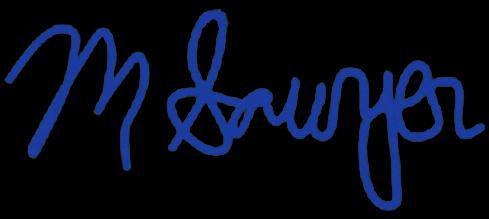
SignatureMichael Sawyer's signature

NameMichael Sawyer

Cert.Private Pilot 1234567

13
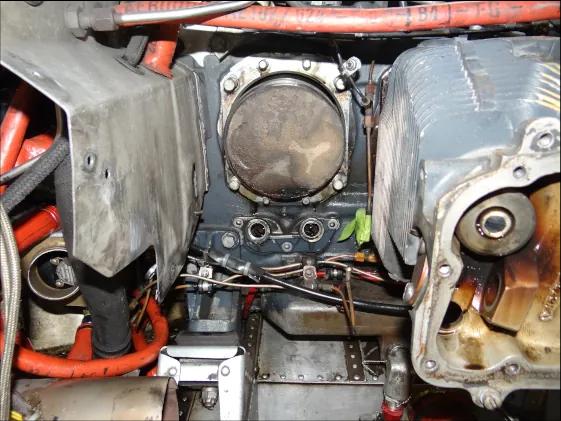
A Lycoming TIO-540 with one cylinder removed, its piston showing in the open bay

Call An A&P Mechanic For

6 jobs
  • Annual and 100-hour inspections: an annual takes an A&P with an Inspection Authorization, a rated repair station or the aircraft's manufacturer; a 100-hour, an A&P
  • Major repairs and major alterations, recorded on FAA Form 337
  • Any job with complex assembly, or a wheel or ski change that needs a weight and balance computation
  • Transponders, autopilots and DME, even when they slide into a tray (item 31 leaves them out)
  • Hydraulic hose connections (item 21 leaves them out)
  • A cowling that needs the propeller off or the flight controls disconnected (item 19)
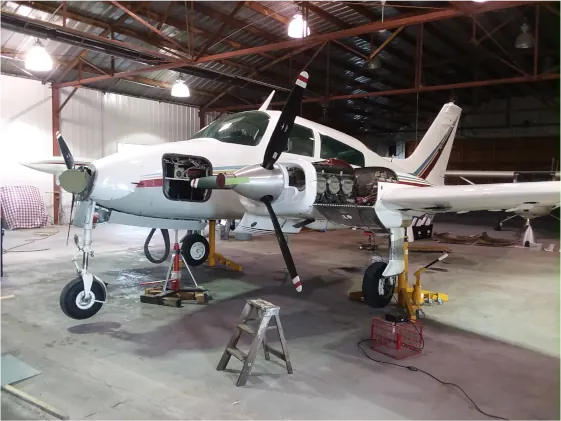
A Cessna 310 on jacks in a hangar, its engine cowlings and inspection panels open for an annual inspection
Owner-Assisted Annual

Helping With Your Own Annual

Beyond the list, you can do maintenance under a mechanic's supervision: they watch the work closely enough to know it's done right and stay on hand (§ 43.3(d)). It's how an owner-assisted annual saves labor. The inspection itself stays the mechanic's.

What an annual inspection costsHow to borescope your engine

Aircraft Owner Maintenance FAQ

Frequently asked questions about the maintenance an aircraft owner can do. More answers are in the full FAQ.

Preventive maintenance on an aircraft they own or operate that isn't flown under Part 121, 129 or 135: the 31 jobs in 14 CFR Part 43, Appendix A, such as changing tires, cleaning and gapping spark plugs, replacing oil and fuel filters, servicing batteries and replacing seats and safety belts, as long as the job involves no complex assembly. A private pilot can then sign the aircraft back into service.

The holder of a pilot certificate may perform preventive maintenance on an aircraft they own or operate that isn't flown under Part 121, 129 or 135 (§ 43.3(g)); a private pilot or higher may approve it for return to service (§ 43.7(f)). Certificated mechanics, repairmen and repair stations may do it too (§ 43.3(b), (c), (e)).

Yes, on an aircraft they own or operate that has a special airworthiness certificate in the light-sport category (§ 43.3(g)), and they can approve it for return to service (§ 43.7(h)). A standard-category aircraft that would qualify as light-sport doesn't count.

Yes. The entry gives a description of the work, the date it was finished, and the signature, certificate number and kind of certificate of the person approving it (§ 43.9).

Yes, under a mechanic's supervision: the mechanic watches the work closely enough to know it's done right and stays on hand (§ 43.3(d)). The inspection itself, and signing it off, stay with the mechanic.

Anything not on the FAA's list, or that involves complex assembly: annual and 100-hour inspections, major repairs and alterations, transponders, autopilots and DME, hydraulic hose connections, and any cowling or wheel change that needs the propeller off, the flight controls disconnected or a weight and balance computation.

Michael Sawyer, A&P/IA aircraft mechanic and founder of Phalanx Aviation

About The Author

Michael Sawyer, A&P/IA

Founder, Phalanx Aviation · Host of Phalanx Frequency

An FAA-certificated aircraft mechanic with Airframe and Powerplant ratings and Inspection Authorization, the authorization that lets a mechanic sign off an annual inspection, with 15+ years in general aviation maintenance.

  • FAA Airframe & Powerplant mechanic
  • Inspection Authorization (IA)
  • 15+ years in general aviation maintenance
  • FAA certificate A&P 3402802 IA

Check the certificate on the FAA Airmen Inquiry →

Request A Mechanic

Free and takes about 2 minutes. Mechanics contact you directly.
Up to 25 MB per file. JPG, PNG, WebP, HEIC, PDF, TXT, DOC, DOCX. Photos are automatically resized for faster upload.

We'll set up a free Phalanx account with this email so you can track your request.

By submitting this form, you understand, have read, and agree to our Privacy Policy and Terms & Conditions.

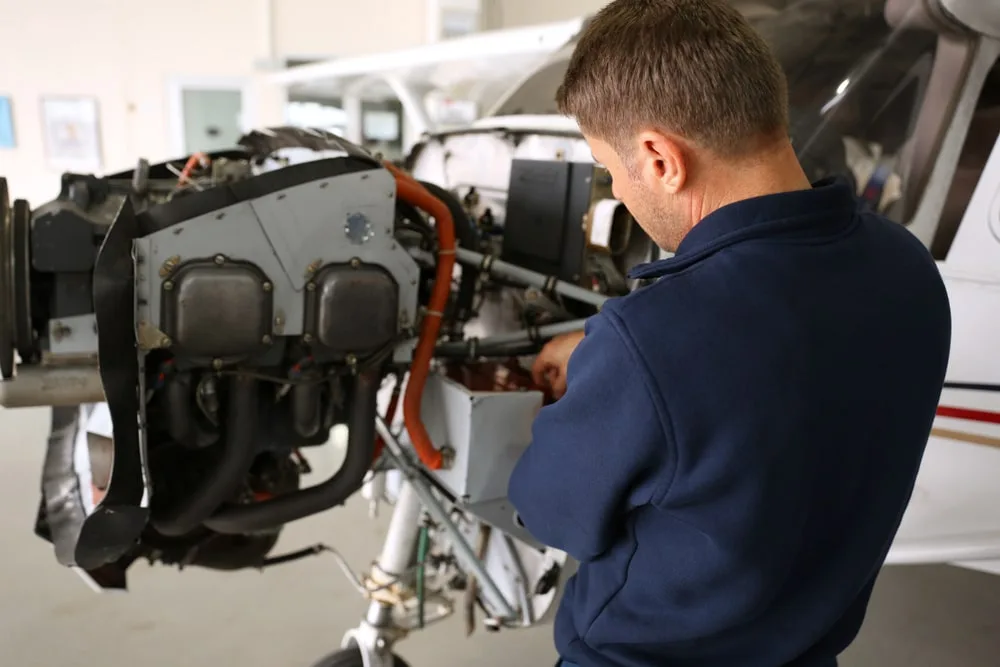
Mechanic working on the exposed engine of a light aircraft

Need More Than Preventive Maintenance?

Search the independent A&P mechanics near your airport, or send one request. Mechanics contact you directly.